
معين برس- متابعات:
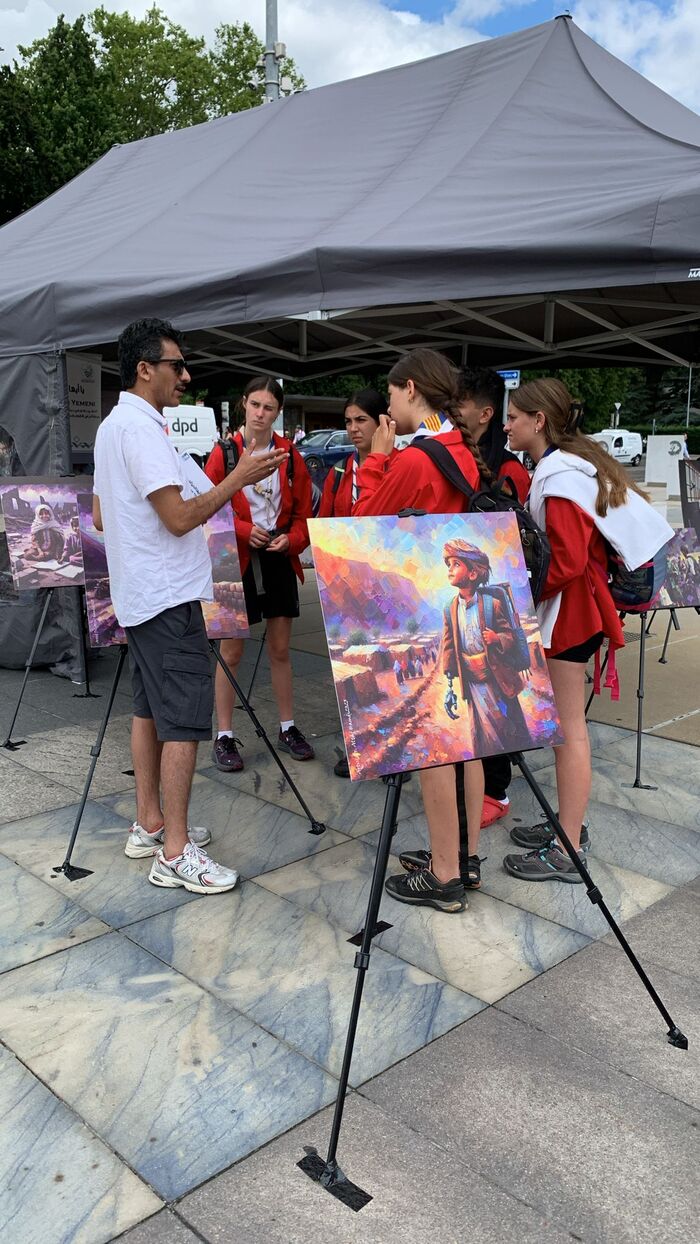
في قلب العاصمة الدبلوماسية العالمية جنيف، وتحديدًا في ساحة الأمم المتحدة، يستضيف "معرض الفن التشكيلي اليمني" حدثًا فنيًا بارزًا يسلط الضوء على الأوضاع السياسية والإنسانية في اليمن، وذلك يومي الاثنين والثلاثاء الموافقين 7 و 8 يوليو 2025. المعرض الذي يحمل عنوان "يا أيها الدنيا أنا يمني، أنا سفير بلادي في مواجعها.. وصوتها الحر في الأقطار والمدنِ" يمثل صرخة فنية بوجه المعاناة والانتهاكات التي يرتكبها الحوثيون.
صرخة فنية بوجه المعاناة والانتهاكاتلا يقتصر هذا المعرض على كونه فعالية ثقافية فحسب، بل هو صرخة فنية للأبرياء وضحايا الألغام، وصوت لمن غيبتهم المعتقلات وقمعت حريتهم جراء جرائم ميليشيات الحوثي الإرهابية. يجسد المعرض عمق المأساة الإنسانية في اليمن، مستخدمًا أدوات فنية معاصرة لتعزيز وقع الرسالة. اللوحات المعروضة، التي أنتجت بتقنيات الذكاء الاصطناعي، تتجاوز الجماليات التقليدية لتصبح وثائق بصرية حية لانتهاكات حقوق الإنسان. كل بكسل رقمي يصور قصة انتهاك صارخ ومعاناة إنسان يمني يُجرد من أبسط حقوقه، بهدف استثارة الضمير العالمي.يُقام المعرض أمام مقر الأمم المتحدة، تحديدًا عند معلم "الكرسي المكسور". يرمز هذا النصب التذكاري القوي إلى رفض الألغام الأرضية والقنابل العنقودية ومعاناة ضحايا العنف المسلح. تضفي هذه الرمزية على المعرض بُعدًا سياسيًا وحقوقيًا عميقًا، فهو لا يكتفي بعرض الألم، بل يُفعل رمزيته ليصبح صرخة تعبر عن صمت شعب يعاني في ظلال التدهور المستمر للأوضاع الإنسانية وحقوق الإنسان في اليمن.
الفن كوثيقة إدانة: جرائم الحوثي تحت المجهر الرقميالرسالة الجوهرية للمعرض واضحة: إبراز المعاناة الإنسانية في اليمن وتأثير جرائم ميليشيات الحوثي الإرهابية على حقوق الإنسان والحريات الأساسية. من خلال الفن التشكيلي المبتكر بالذكاء الاصطناعي، يسعى المعرض إلى بناء وعي عالمي يُفضي إلى حماية المدنيين وتحقيق العدالة في بلد يعاني من صراع طال أمده.ترتكز محاور رسالة المعرض على دعائم حقوقية وسياسية أساسية:توثيق الجرائم: يقدم المعرض توثيقًا بصريًا مؤثرًا للانتهاكات الجسيمة لحقوق الإنسان التي ترتكبها ميليشيات الحوثي، من قمع للحريات، واعتقالات تعسفية، وتعذيب وحشي، وأحكام إعدام جائرة، إلى تجنيد الأطفال، وتفجير المنازل، وزرع الألغام. هذه اللوحات ليست مجرد تعبير فني، بل هي أدلة بصرية تدين الممارسات غير الإنسانية.كشف الأبعاد الإنسانية: يبرز المعرض الأثر المدمر لهذه الجرائم على حياة اليمنيين الأبرياء، خاصة النساء والأطفال والناشطين، الذين يدفعون الثمن الأكبر للصراع. إنها دعوة للتفكير في التكلفة البشرية للصراع على الأفراد والمجتمعات.المطالبة بالمساءلة: يوجه المعرض نداءً صريحًا للمجتمع الدولي، يحثه على تحمل مسؤولياته تجاه حماية المدنيين في اليمن. يطالب بضرورة محاسبة مرتكبي هذه الانتهاكات وضمان عدم إفلاتهم من العقاب، مؤكدًا مبدأ "لا مفر من العقاب" الذي يُعد حجر الزاوية في العدالة الدولية.التحذير من التهديد الإرهابي: يُنبه المعرض الرأي العام الدولي إلى الخطر المتزايد الذي تشكله ميليشيات الحوثي ككيان إرهابي يهدد الأمن الإقليمي والعالمي، مؤكدًا على ضرورة التعامل مع هذه الميليشيات كقوة لا تزعزع الاستقرار المحلي فحسب، بل تشكل تهديدًا عالميًا.
ريشة تقاضي وذاكرة توثّق
قدمت التشكيلية والأكاديمية اليمنية الدكتورة ألطاف حمدي أعمالها الرقمية من خلال رؤيتها الفنية التي تنطلق من إيمان راسخ بفاعلية الفن كأداة لإحلال السلام والتنمية المستدامة. تجسد الدكتورة حمدي جسرًا فنيًا يُعلي صوت اليمن على الساحة العالمية. يُعد توظيفها للذكاء الاصطناعي اختيارًا فلسفيًا عميقًا؛ فهو يمكنها من التعبير عن الواقع بتشوهاته وجمالياته المتناقضة، مع حماية حقوق وصور هؤلاء الضحايا الأبرياء وإخفاء ملامحهم خوفًا على سلامتهم من التعرف عليهم وتعنيفهم أو تعذيبهم، كما أنها تحمي حقوقهم الإنسانية وتراعي مشاعرهم من التشهير أو استغلالهم، ولذلك اختارت هذه التقنية لتصل رسالتهم وصوتهم للعالم، ولتنشئ عوالم بصرية مركبة تعكس تعقيدات المشهد اليمني بأبعاده السياسية والحقوقية.إن هذه الأعمال الفنية تتجاوز كونها مجرد لوحات؛ فهي شهادات حية تنبض بآلام شعب وتطلعاته إلى العدالة والسلام. إنها دعوة مفتوحة للفهم والتعاطف، وتأكيد راسخ على أن الفن، حتى في أعمق أزمات الإنسانية، يظل بمثابة النور الذي يشق عتمة الواقع، ويبشر بفجر جديد من السلام والعدالة.فهل ستصغي قاعات الأمم المتحدة، وتحديدًا ساحة الكرسي المكسور، لصرخة الفن هذه، وتترجمها إلى تحرك سياسي وحقوقي فاعل؟
Yemeni Art Exhibition in Geneva Raises Yemen's Voice: "Oh World, I Am Yemeni"Geneva, Switzerland – In the heart of Geneva, the diplomatic capital of the world, specifically in front of the United Nations Square, the "Yemeni Plastic Art Exhibition" will host a prominent artistic event shedding light on the political and humanitarian situation in Yemen. This will take place on Monday and Tuesday, July 7 and 8, 2025. The exhibition, titled "Oh World, I am Yemeni, I am my country's ambassador in its pains… and its free voice in lands and cities," represents an artistic cry against the suffering and violations committed by the Houthis.
An Artistic Cry Against Suffering and ViolationsThis exhibition is not merely a cultural event; it's an artistic outcry for the innocent and victims of landmines, a voice for those silenced in detention centers, and for those whose freedom has been suppressed due to the crimes of the Houthi terrorist militias. The exhibition embodies the profound humanitarian tragedy in Yemen, employing contemporary artistic tools to enhance the impact of its message. The displayed paintings, created using artificial intelligence techniques, transcend traditional aesthetics to become living visual documents of human rights violations. Every digital pixel depicts a story of blatant violation and the suffering of a Yemeni individual stripped of their most basic rights, aiming to stir global conscience.The exhibition is held in front of the United Nations headquarters, specifically at the "Broken Chair" monument. This powerful memorial symbolizes the rejection of landmines and cluster bombs and the suffering of victims of armed violence. This symbolism lends the exhibition a deep political and human rights dimension. It doesn't just display pain; it activates its symbolism to become a cry that expresses the silence of a people suffering under the continuous deterioration of humanitarian and human rights conditions in Yemen.
Art as an Indictment: Houthi Crimes Under the Digital MicroscopeThe exhibition's core message is clear: to highlight the humanitarian suffering in Yemen and the impact of the Houthi terrorist militias' crimes on human rights and fundamental freedoms. Through innovative AI-powered visual art, the exhibition seeks to build global awareness that leads to the protection of civilians and the achievement of justice in a country suffering from prolonged conflict.The exhibition's message revolves around key human rights and political pillars:Documenting Crimes: The exhibition provides powerful visual documentation of grave human rights violations committed by Houthi militias, including suppression of freedoms, arbitrary detentions, brutal torture, unjust death sentences, child recruitment, bombing of homes, and planting of landmines. These paintings are not merely artistic expressions but visual evidence condemning inhumane practices.Revealing Humanitarian Dimensions: The exhibition highlights the devastating impact of these crimes on the lives of innocent Yemenis, especially women, children, and activists, who bear the brunt of the conflict. It's a call to reflect on the human cost of the conflict on individuals and communities.Demanding Accountability: The exhibition issues a clear appeal to the international community, urging it to uphold its responsibilities towards protecting civilians in Yemen. It demands accountability for the perpetrators of these violations and ensures they do not escape punishment, emphasizing the principle of "no impunity," which is a cornerstone of international justice.Warning of the Terrorist Threat: The exhibition alerts international public opinion to the growing danger posed by Houthi militias as a terrorist entity threatening regional and global security, emphasizing the need to deal with these militias as a force that not only destabilizes locally but also poses a global threat.
A Brush that Prosecutes and a Memory that DocumentsYemeni artist and academic Dr. Altaf Hamdi presents her digital works through an artistic vision rooted in a firm belief in the effectiveness of art as a tool for peacebuilding and sustainable development. Dr. Hamdi embodies an artistic bridge that elevates Yemen's voice on the global stage. Her use of artificial intelligence is a profound philosophical choice; it enables her to express reality with its distortions and contradictory beauties, while protecting the rights and images of these innocent victims by obscuring their features for fear of identification, abuse, or torture. She also protects their human rights and respects their feelings against defamation or exploitation. This is why she chose this technology to convey their message and voice to the world, and to create complex visual worlds that reflect the complexities of the Yemeni scene in its political and human rights dimensions.These artworks transcend mere paintings; they are living testimonies pulsating with the pains of a people and their aspirations for justice and peace. They are an open invitation to understanding and empathy, and a firm affirmation that art, even in humanity's deepest crises, remains a light that pierces the darkness of reality, heralding a new dawn of peace and justice.Will the halls of the United Nations, specifically the Broken Chair Square, heed this artistic cry and translate it into effective political and human rights action?